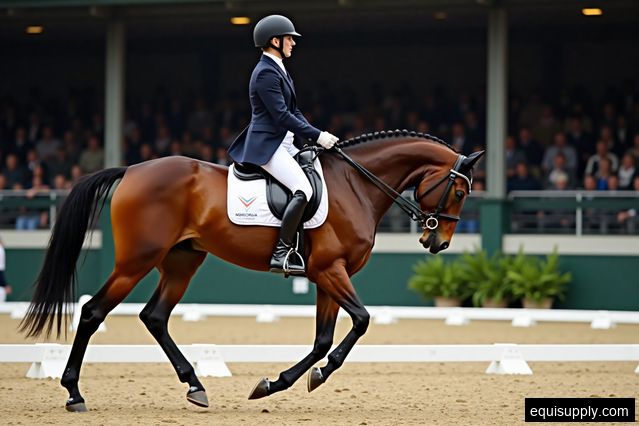
Understanding Dressage: A Harmonious Partnership
Dressage, derived from the French word "dresser" meaning "to train," is an equestrian sport that showcases the elegance and harmony between horse and rider. It emphasizes the development of natural movements, precision, and obedience. The rider's aids, such as subtle weight shifts, leg pressure, and rein contact, communicate with the horse to achieve seamless transitions and graceful movements.
The Basics: Establishing a Solid Foundation
Before diving into complex maneuvers, it's essential to establish a solid foundation. Begin by focusing on the horse's rhythm, relaxation, and connection with the rider. Establishing a consistent rhythm allows for smooth transitions and helps the horse maintain balance. Relaxation plays a vital role in dressage, as a tense horse cannot perform at its best. The rider should ensure the horse feels confident and relaxed throughout the training sessions. Lastly, developing a strong connection between horse and rider is crucial. Clear communication through aids and a trusting partnership lays the groundwork for success in dressage.
Training Techniques for Dressage Success
To excel in dressage, riders must employ various training techniques that enhance the horse's athleticism, responsiveness, and overall performance. Incorporating these techniques into your training routine will boost the horse's physical and mental capabilities.
1. Suppleness and Flexibility
Suppleness and flexibility are fundamental aspects of dressage. Exercises such as shoulder-in, leg-yield, and serpentines improve the horse's ability to bend and flex its body. These exercises also enhance the horse's balance and engagement of the hindquarters. Regular practice of suppling exercises contributes to the development of a more agile and responsive horse.
Fine-Tuning Advanced Techniques
Once the basics are mastered, riders can progress to more advanced techniques that require precision, collection, and extension.
1. Collection and Extension
Collection refers to the gathering of the horse's energy and engagement of the hindquarters, resulting in increased balance and agility. Extension, on the other hand, involves lengthening the horse's stride while maintaining rhythm and impulsion. These two techniques demonstrate the horse's ability to adjust its movement according to the rider's subtle cues and commands.
The Importance of Consistency and Patience
Consistency and patience are key factors in dressage training. Progression in dressage takes time, and it's crucial to understand that each horse learns at its own pace. Consistent training sessions, maintaining a positive attitude, and celebrating small achievements contribute to long-term success. Patience allows the horse to understand and respond to the rider's aids without feeling rushed or overwhelmed.
Final Thoughts
Dressage is not only a sport but an art form that showcases the beauty and harmony between horse and rider. By mastering the basics, incorporating effective training techniques, and embracing patience and consistency, riders can unlock the full potential of their horse in the world of dressage. Remember, it's not just about the destination but the journey of continuous growth and improvement.